


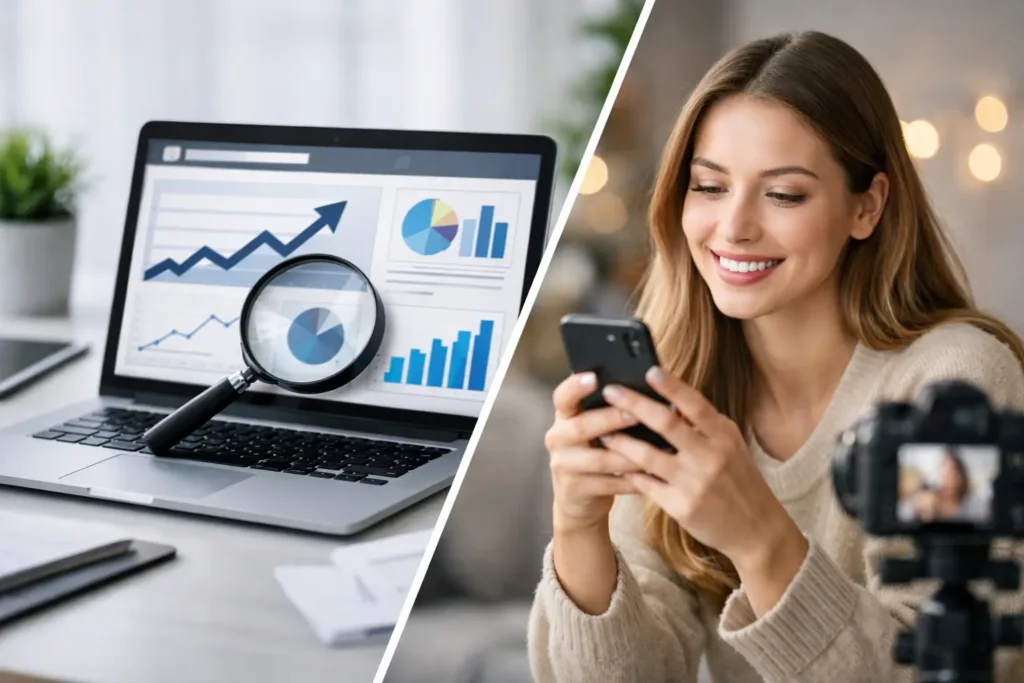
A local service business can publish a helpful page today and earn leads from Google for months. A product brand can partner with the right creator tomorrow and put its offer in front of thousands of highly engaged buyers. That is the practical difference behind SEO vs influencer marketing: one earns visibility when people are actively searching, while the other creates attention through people audiences already trust.
For small and mid-sized businesses, this is not just a marketing theory question. Budget, timing, sales cycle, and the type of customer you need all affect which channel should lead. The strongest answer is often not choosing one over the other. It is using each for the job it does best.
SEO vs Influencer Marketing: The Core Difference
SEO, or search engine optimization, improves your ability to appear in organic search results. It includes the technical health of your website, keyword mapping, useful content, on-page improvements, credible backlinks, local search signals, and ongoing performance tracking. The goal is to attract qualified visitors when they search for a service, product, problem, or location you serve.
Influencer marketing puts your brand in front of an established audience through creators on platforms such as Instagram and TikTok. The goal may be awareness, social proof, product discovery, website traffic, content creation, or direct sales. A creator can make a product feel relevant quickly because the message comes from a familiar voice rather than a traditional advertisement.
The key distinction is intent. SEO captures demand that already exists. Influencer marketing can create demand, strengthen trust, and introduce your business to people who were not searching for you yet.
When SEO Is the Better Investment
SEO is usually the better starting point when customers rely on Google to find a solution. A homeowner searching for a San Diego roofer, a business owner looking for accounting support, or a buyer comparing software options has clear intent. Ranking for those searches can bring visitors who are already closer to a decision.
SEO is also a strong fit for businesses with evergreen services, repeatable customer questions, and a defined local or national market. A well-built service page, location page, or educational article can continue working long after it is published. Unlike a paid social post that ends when the campaign ends, organic visibility can compound over time.
That does not mean SEO is instant. New websites, competitive industries, and weak backlink profiles need patience. Meaningful improvement often takes several months, especially when competitors have invested in content and authority for years. Businesses that need qualified leads next quarter and can commit to consistent improvement are generally well positioned for SEO.
A practical SEO program should go beyond adding keywords to a few pages. It should connect search terms to the right pages, improve site structure and user experience, create useful content, earn quality links, and measure what happens after someone clicks. Rankings matter, but calls, form submissions, appointments, and revenue matter more.
When Influencer Marketing Makes More Sense
Influencer marketing is especially useful when your brand needs attention quickly or benefits from visual demonstration. Consumer products, restaurants, fitness brands, beauty services, events, hospitality businesses, and lifestyle-focused companies can often show their value more effectively through a creator than through a search result alone.
It also works well when trust is the barrier. A new skincare product, a local restaurant, or a subscription service may not have much name recognition. Seeing a credible micro-influencer use it, explain it, or recommend it can reduce hesitation. The best partnerships do not feel like a generic endorsement. They give the creator enough room to speak naturally to the audience they have built.
Speed is the major advantage. A campaign can launch in days or weeks, depending on creator selection and approval needs. You can test messaging, product angles, offers, and audience response far faster than you can build organic rankings.
Still, reach is not the same as results. A creator with a large follower count may have an audience that is too broad, poorly matched to your market, or unlikely to buy. For many growing businesses, a group of relevant micro-influencers can outperform one expensive celebrity-style placement. Smaller creators often have stronger community engagement and can provide a more believable introduction to a niche audience.
The Trade-Offs Business Owners Should Consider
SEO and influencer marketing have different cost structures and risk profiles. SEO requires ongoing work before it produces its full value, but the traffic and authority you earn can become a long-term asset. Influencer marketing can produce immediate exposure, but each campaign has a defined lifespan unless you build an ongoing creator program.
SEO is easier to connect to high-intent lead generation for many service businesses. If someone searches “emergency plumber near me,” the need is obvious. An influencer post may build awareness for the same plumbing company, but it is less likely to reach a person at the exact moment a pipe breaks.
Influencer marketing has an advantage when a customer does not know to search for your offer. A new apparel brand, food product, or wellness service may need to be seen before shoppers think to look for it. Creators can make that first introduction and provide the social proof that moves people toward your website.
Measurement requires care in both channels. SEO should be evaluated through qualified organic traffic, calls, leads, conversion rates, and revenue trends, not rankings alone. Influencer campaigns should use clear tracking methods such as dedicated landing pages, promo codes, creator-specific links where appropriate, engagement quality, content saves, and sales. Do not judge a campaign only by likes or impressions.
A Better Approach: Let Search and Creators Support Each Other
The most effective strategy often combines the lasting value of SEO with the momentum of influencer marketing. SEO gives potential customers a credible place to land when they search your brand or category. Influencer content gives your brand more visibility, more usable creative assets, and more reasons for people to search in the first place.
For example, a local wellness clinic may optimize pages for treatments, locations, pricing questions, and patient concerns. It can then work with local creators who document a real visit and explain why they chose the clinic. When viewers search the clinic afterward, they should find clear, trustworthy pages that answer the next question and make booking easy.
This combination also helps prevent wasted spend. Sending influencer traffic to a slow website, a vague homepage, or a page with no clear next step limits campaign value. Likewise, publishing excellent SEO content without promoting your brand or earning attention can make growth slower than it needs to be.
Social-media-supported SEO can support the larger system. Creator content can increase brand awareness, encourage branded searches, provide authentic media for your social channels, and create opportunities for wider content distribution. It is not a shortcut to search rankings, but it can strengthen the brand signals and audience interest around a well-executed SEO foundation.
How to Choose Based on Your Goals
Start with the question your business needs to answer now. If the priority is steady, qualified traffic from people already searching for your services, lead with SEO. This is particularly true for local businesses, B2B companies, home services, professional services, and businesses with high-value customer relationships.
If the priority is product awareness, visual proof, a new launch, or reaching a specific community quickly, start with influencer marketing. Choose creators based on audience relevance, engagement quality, geographic fit, content style, and past partnership performance, not follower count alone.
If you need both lead generation and brand exposure, build a coordinated plan. Invest in the website pages and content that convert searchers, then use influencers to expand awareness and bring fresh audiences into the funnel. Your budget does not need to be split evenly. It should be allocated based on your buying cycle, competitive landscape, and how quickly you need results.
A transparent partner should be able to explain what work is being done, why it matters, and how performance will be measured. At Zoom Trans, that means treating SEO and influencer marketing as connected growth tools, not separate checkboxes. The right plan should fit your business goals, stay flexible month to month, and earn its place in your budget through visible progress.
Your next customer may arrive through a Google search, a creator recommendation, or both. Make sure the experience after that first click gives them a clear reason to choose you.